A recent article from Flinders University shines a much-needed light on what it takes to ensure a good death for people living in aged care. Based on interviews with staff from 15 aged-care services, the research confirmed what many of us in the end of life space already know: good intentions alone aren’t enough.
Nurses and care staff often notice a decline many months before death occurs. They want to provide person-centred care and emotional support, but the system gets in the way. Time, training and emotional space are in short supply. As one nurse put it, “We know what needs to happen, but there’s not always someone available to make it happen.”
So, the question I keep coming back to is:
Why aren’t we including End of Life Doulas in this care equation?
There’s a clear gap. Doulas can help fill it.
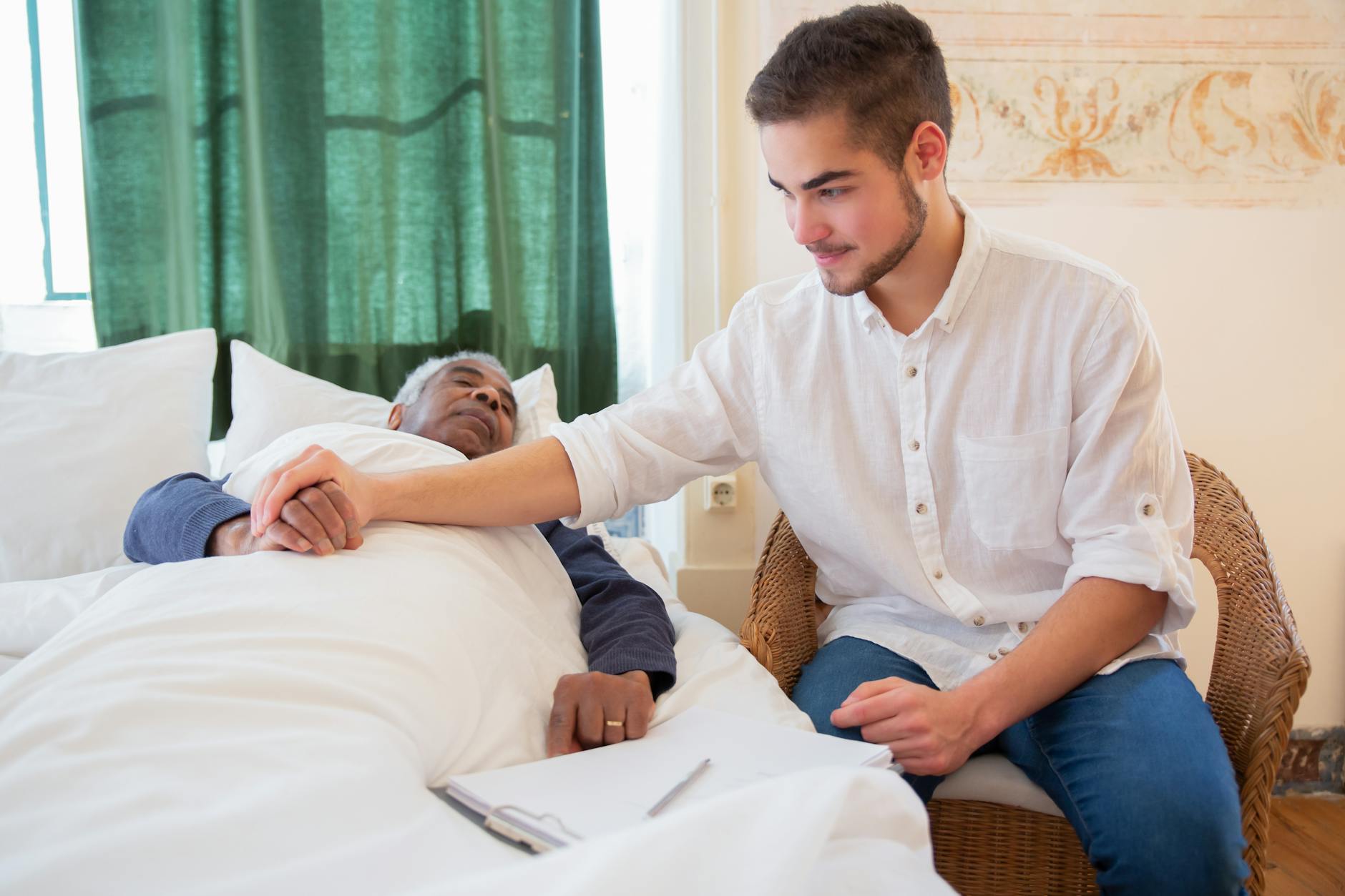
When a resident begins to decline, families are often unsure what to say or do. Staff might not have time to sit quietly, offer presence or support difficult conversations. This is where End of Life Doulas can make a meaningful difference.
We’re trained to:
- Sit with families and help them find language for what’s unfolding
- Support residents to explore their values and preferences
- Offer non-clinical companionship, legacy support and grief preparation
- Reduce unnecessary hospital transfers by helping everyone stay on the same page
We don’t replace nurses or doctors – we complement them.
The tools exist. The time is right.
Programs like ELDAC are already helping aged-care teams plan ahead and talk more openly about end of life. But research shows that implementation is patchy. Frontline staff are stretched. Deaths still occur without meaningful planning, and some residents die alone or confused after unnecessary transfers to hospital.
End of Life Doulas are already supporting aged care residents across Australia, mostly on a volunteer or privately funded basis. We have capacity. We have the skills. What’s missing is formal recognition and integration.
Qualifications and professional backing
Many End of Life Doulas now hold formal qualifications, including the Certificate IV in End of Life Doula Services – the world’s only government-accredited, nationally recognised training program for End of Life Doulas. This ensures a high standard of care and strong understanding of ethical, cultural and clinical considerations for those doulas wishing to work in conventional settings.
We are also supported by peak bodies such as HELD Australia (Holistic End of Life and Death Care Australia), EOLDUK (End of Life Doula UK) and NEDA (the National End of Life Doula Alliance – US), who continue to advocate for quality, safety and collaboration across the health and aged care sectors.
This isn’t limited to aged care.
A newly published study in BMC Palliative Care reveals that these challenges aren’t just happening in residential settings. Hospital-based clinicians – nurses, doctors, allied health – reported strikingly similar concerns.
The study, conducted at a large Australian metropolitan hospital, found that many clinicians struggled to know when and how to initiate palliative conversations. Siloed governance, lack of confidence, limited private spaces and competing acute-care priorities made it hard to deliver consistent end of life support, even when the need was obvious (Virdun et al., 2025).
It points to a broader truth: systems everywhere need non-clinical presence and support.
If clinicians in acute settings are facing these same barriers, why aren’t we considering End of Life Doulas there, too?
End of Life Doulas could:
- Support time-poor clinicians by facilitating early emotional or legacy conversations
- Assist families through high-stress transitions between curative and comfort care
- Offer continuity and gentle presence during rapid or unexpected decline
Whether in aged care or hospital settings, End of Life Doulas offer something that systems alone can’t: time, attention and the emotional scaffolding that makes dying feel less overwhelming – for everyone involved.
Let’s rethink the system.
If we truly want to offer consistent, compassionate end of life care, we need to widen the circle. That means bringing in End of Life Doulas as part of the care team – alongside nurses, doctors, social workers and chaplains.
Because a good death isn’t just about pain relief or ticking clinical boxes. It’s about:
- Being known
- Being heard
- Feeling safe
- Leaving on your own terms
Isn’t it time we made space for that?
If you’re part of the aged care, palliative or policy sectors and want to learn more about how End of Life Doulas can support your team, please get in touch. I’d love to start a conversation.
Visit my website www.yourpathguide.com.au or email me at info@yourpathguide.com.au
About the Author
Shannon Beresford is an End of Life Doula, Sound Therapy Practitioner and founder of Your Path Guide in Adelaide, South Australia. He provides calm, ongoing support to clients and families through all stages of end of life care. Shannon is also Vice Chair of HELD Australia Ltd, the peak body for holistic end of life and death care and volunteers in the Central Adelaide Palliative Care Service (CAPCS).
References
- Flinders University News. (2025, July 22). Ensuring a good death for those in aged care. Retrieved from https://news.flinders.edu.au/blog/2025/07/22/ensuring-a-good-death-for-those-in-aged-care
- Vandersman, P., & Tieman, J. (2025). Residential aged care nurses’ views on caring for residents in the last months of life. BMC Nursing, 24(1), 95. https://doi.org/10.1186/s12912-025-01033-2
- Virdun, C., Singh, G K., Yates, et al. (2025). Understanding the acute care context to inform palliative care improvements: A qualitative study of hospital-based multidisciplinary clinicians. BMC Palliative Care. doi: 10.1186/s12904-024-01376-1
- Rawlings, D., Mills, S., Miller-Lewis, L., Swetenham, K., & Tieman, J. (2022). National Death Doula Roundtable White Paper (RePaDD White Paper No. 9). Research Centre for Palliative Care, Death and Dying, Flinders University. https://doi.org/10.25957/4SJP-8P44
- ELDAC. (2024). Aged Care and End of Life Care Toolkits. Retrieved from https://www.eldac.com.au
- HELD Australia. (2025). Holistic End of Life and Death Care Australia – Membership and Advocacy. https://heldaustralia.org.au
 Your Path Guide Pty Ltd